
Short research paper ID : sjrbm.2026.14 | Open Access

Empowering Investors: FinTech, AI/ML, Blockchain impact


Dr. Suryanarayana Murthy K, Dr. Manohar Lal
Submission Date : March 19, 2026 Publication Date : July 13, 2026


The study investigates the empowerment of investors through the convergence of emerging technologies, i.e., financial technology (FinTech), artificial intelligence & machine learning (AI/ML), and blockchain. The study primarily relies on structured survey data, supplemented conceptually by insights from technology usage contexts, the research tests six hypotheses across direct, mediation, and moderation models.
Findings reveal that FinTech adoption significantly enhances investor empowerment, while blockchain usage improves trust, with trust acting as a mediator in the empowerment pathway. Accessibility also mediates the relationship between FinTech adoption and investor participation. However, AI/ML usage does not directly influence empowerment, and the moderating effect of algorithmic bias was found to be statistically insignificant, which dampen investor confidence. These results highlight both the enabling potential and emerging risks of digital financial technologies, including bias, cybersecurity vulnerabilities and systemic fragility in decentralised finance. The study highlights the need for adaptive regulation, ethical AI design and robust governance to ensure inclusive, transparent, and resilient financial innovation.
The convergence of financial technology (FinTech), artificial intelligence and machine learning (AI/ML), and blockchain has accelerated digital transformation across global financial markets, reshaping how investors access financial services and how innovators build scalable, transparent, and efficient financial products. This empirical study examines the extent to which emerging technologies empower investors by enhancing decision-making, increasing access, reducing costs, and fostering trust in financial ecosystems. The study primarily relies on structured survey data, supplemented conceptually by insights from technology usage contexts, thus the study analyses the mechanisms by which technology-driven financial services create tangible value and identifies the risks they introduce.

Background and Context: The Digital Transformation of Finance
The global financial landscape is undergoing a profound structural change, driven by the rapid and accelerating convergence of financial technology (FinTech), artificial intelligence and machine learning (AI/ML), and blockchain infrastructure. This digital transformation is reshaping how investors access financial services and how innovators build scalable, transparent, and efficient financial products. FinTech, broadly, enables new business models that reduce transaction costs and increase market participation; AI/ML introduces sophisticated predictive intelligence and hyper-personalisation; and blockchain enhances transaction security, transparency, and the potential for decentralisation.

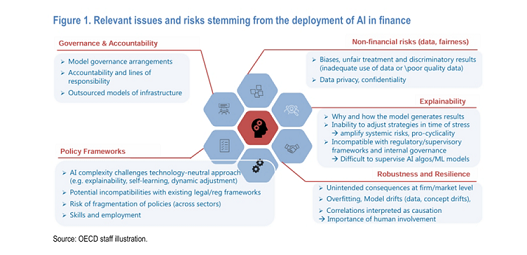
Figure 1 : Relevant issues and risks stemming from the deployment of AI in finance
This technological evolution is rooted in the progression from the fourth industrial revolution (4IR), characterised by the fusion of physical, digital, and biological spheres through technologies like AI, Blockchain, and Big Data, to the emerging fifth industrial revolution (5IR). The 5IR emphasises human-centric innovation, ethical AI, and sustainability, leading to structural shifts in FinTech such as human-AI collaboration, responsible technology design, and the integration of sustainable finance (ESG) metrics. This convergence has created a powerful ecosystem that demands empirical investigation, particularly regarding its effect on stakeholders.
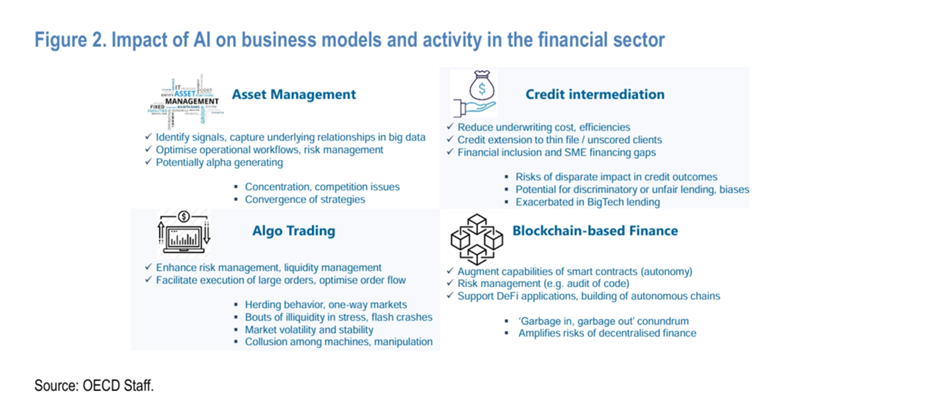
Figure 2 : Impact of AI on business models and activity in the finance Sector
Problem Statement and Research Gap
While the adoption of these frontier technologies is expanding rapidly, with global investments in AI in financial services projected to exceed US$97 billion by 2027, academic understanding of the mechanism by which they truly empower key stakeholders, namely investors, remains underdeveloped. Existing literature often focuses on isolated aspects, such as algorithmic trading, mobile banking, or specific crypto assets. Consequently, there is a distinct gap in empirical work that integrates the overall empowerment mechanism across the interconnected FinTech–AI–Blockchain ecosystem.
The fundamental problem addressed by this study is to empirically establish the degree to which these synergistic technologies enhance decision-making, increase market access, reduce costs, and strengthen overall trust and innovation capacity for the stakeholders they serve.
This study examines how the frontier technologies enhance investor confidence, accessibility and innovation capacity, while also introducing risks such as algorithmic bias, cybersecurity vulnerabilities, and systemic fragility in decentralised finance. Using a mixed-methods design, the research tests direct effects (FinTech, AI/ML, blockchain on empowerment), mediation effects (trust mediating blockchain’s impact; accessibility mediating FinTech’s impact) and moderation effects (algorithmic bias shaping AI’s influence on investor confidence). By integrating these analytical lenses, the study provides a holistic framework to understand how technology-driven financial services empower stakeholders and bridge critical gaps in existing literature.
 
The study employs a Quantitative Survey Approach to test the hypothesised cause-and-effect relationships among the constructs. This design is best suited for analysing attitudes, perceptions, and behaviours across a large sample size using standardised measurement tools.
The entire measurement process is based on a 5-point Likert scale, where respondents indicate their level of agreement with various statements: (1 = Strongly Disagree to 5 = Strongly Agree).

Measurement Scales and Constructs
The analysis utilises the following latent variables in Table 2 or constructs, which are measured by their respective multi-item scales within the online survey.

Construct Code Type Items
FinTech Adoption FA Independent Variable FA1 to FA6
AI/ML Usage & Perception AIU Independent Variable AIU1 to AIU6
Blockchain Trust & Transparency BT Independent Variable BT1 to BT6
Investor Empowerment IE Dependent Variable IE1 to IE6
Investor Trust IT Mediator (H4) IT1 to IT4
Investor Participation/Accessibility AP Mediator (H5) AP1 to AP4
Algorithmic Bias Perception ABP Moderator (H6) ABP1 to ABP4
Table 2 : Variable Construct

Data Collection Procedure
The data for this study were collected using a structured online questionnaire designed on digital survey platforms. The study employed purposive sampling through institutional networks, investor associations and FinTech user groups. This approach ensured that respondents had relevant exposure to financial technologies and could provide informed perspectives on empowerment mechanisms.
The survey instrument was developed by adapting items from established scales in prior FinTech and AI/ML research, supplemented with context-specific items for blockchain and investor empowerment. Content validity was ensured through expert review and pilot testing. Reliability for the same confirmed via Cronbach’s Alpha, with all constructs exceeding the accepted threshold of 0.80, demonstrating strong internal consistency.
The instrument was disseminated electronically through institutional networks, email invitations, and digital media channels to ensure broad participation across diverse respondent groups. Participants were provided with informed consent instructions before proceeding, and only those who confirmed eligibility (18 years or older) were included. Responses were captured using a 5-point Likert scale (1 = Strongly Disagree to 5 = Strongly Agree), enabling quantitative analysis suitable for regression, mediation, moderation, and structural equation modelling. The collected data were subsequently coded into numerical values and compiled in Excel format, ensuring consistency and readiness for statistical analysis. This approach facilitated efficient distribution, enhanced accessibility, and ensured anonymity, thereby strengthening the reliability and validity of the dataset for hypothesis testing.

Data Collection
The final sample size for this study is N = 51, which is considered acceptable given the exploratory empirical research and theory-testing nature of the research. In studies employing regression-based approaches, a minimum sample size of 30–50 observations is often regarded as sufficient for detecting medium to large effect sizes[17] . The modest sample size of 51 respondents is justified by the purposive selection of highly experienced investors, many with over a decade of investment practice, which strengthens the validity of insights despite the limited number. Furthermore, all constructs demonstrated excellent reliability (Cronbach’s α > 0.80), supporting the robustness of the dataset.

Data Processing
The raw coded data were rigorously processed to ensure consistency and reliability before conducting any inferential statistical testing.

  1. Numerical Conversion: The text responses, i.e. 5 – Strongly Agree, were converted into their corresponding numerical scores (1-5) to facilitate calculation.
  2. Scale Reliability Testing: Cronbach's Alpha (α) was calculated for each multi-item scale (FA, AIU, BT, IE, IT, AP, ABP) to establish the internal consistency and reliability of the constructs.
  3. Construct Score Calculation: A single, aggregated mean score for each construct was computed by averaging the numerical scores of its constituent items: FA Score = Mean (FA1, FA2, …, FA6)

Inferential Statistical Analysis
This study adopts a regression-based analytical framework to test the proposed direct, mediation, and moderation relationships among constructs. Ordinary Least Squares (OLS) regression is employed to test direct effects (H1–H3), while mediation and moderation analyses are conducted using Hayes’ PROCESS macro. This approach is widely recognised for its robustness in estimating indirect and interaction effects, particularly in studies with relatively small sample sizes.
Although Structural Equation Modelling (SEM) is commonly used for analysing latent constructs and complex relationships, it typically requires larger sample sizes to produce stable and reliable estimates. Given the sample size (N = 51), the use of SEM was deemed less appropriate for the present study. Instead, composite construct scores (mean values of multi-item scales) were utilised, enabling the application of regression-based techniques while maintaining measurement reliability i.e. Cronbach’s alpha above 0.80. Therefore, the analysis is aligned with best practices for small-sample empirical research and ensures methodological rigour in testing the hypothesised relationships.

Testing Direct Hypotheses (H1, H2, H3)
A series of simple or multiple linear regression models will be used to test the direct relationships between the independent and dependent variables, as in Table 3.

Hypothesis Test Type Independent Variables (IV) Dependent Variable (DV)
H1 Simple Linear Regression FinTech Adoption (FA) Investor Empowerment (IE)
H2 Simple Linear Regression AI/ML Usage (AIU) Investor Empowerment (IE)
H3 Simple Linear Regression Blockchain Usage (BT) Investor Trust (IT)
Table 3 : Direct hypothesis testing

Testing Mediation Hypotheses (H4, H5)
Mediation analysis, primarily using Hayes’ PROCESS macro or an SEM approach, will be employed to test the indirect effects as per Table 4, determining if the influence of the independent variable on the dependent variable is transmitted through an intermediary (mediator) variable.

Hypothesis Independent Variable (X) Mediator (M) Dependent Variable (Y)
H4 Blockchain Usage (BT) Investor Trust (IT) Investor Empowerment (IE)
H5 FinTech Adoption (FA) Investor Participation (AP) Investor Empowerment (IE)
Condition for Support The indirect effect (a x b) must be statistically significant.    
Table 4 :Mediation hypothesis testing

Testing Moderation Hypothesis (H6)
Moderation analysis is used to determine, as per Table 5, if the effect of AI/ML usage on Investor Empowerment is conditional on the level of perceived Algorithmic Bias (Moderator).

Hypothesis Independent Variable (X) Moderator (W) Dependent Variable (Y)
H6 AI/ML Usage (AIU) Algorithmic Bias Perception (ABP) Investor Empowerment (IE) as proxy for confidence
Test Multiple regression predicting IE from AIU, ABP, and the interaction term (AIU x ABP).    
Condition for Support The interaction term (AIU x ABP) must be statistically significant.    
Table 5 : Moderation Hypothesis Testing

Mathematical Equations and Analytical Methods
The following core equations define the statistical tests employed in this research.
a. Scale Reliability (Cronbach's Alpha)
Cronbach's Alpha (α) is used to measure the internal consistency and reliability of a multi-item scale.
α=KK-1 1- i=1kσYi2σX2  
Equation 1 : Scale Reliability (Cronbach's Alpha)
Where:

  • K is the number of items (questions) in the scale.
  • σYi2  is the variance of item i.
  • σX2  is the variance of the observed total score for the scale (sum of all items).

b. Ordinary Least Squares (OLS) Linear Regression (Direct Effects: H1, H2, H3)
Linear Regression is used to test the direct, linear relationship between an independent variable and a dependent variable.
The general form of the simple regression equation for hypotheses H1, H2, and H3 is:
Y=β0+β1X+ ϵ
Equation 2 : Ordinary Least Square
Where:

  • Y is the Dependent Variable
  • X is the Independent Variable.
  • β0  is the intercept of the value of Y when X=0.
  • β1  is the regression coefficient, which represents the expected change in Y for every one-unit increase in X.
  • ϵ  is the error term.

c. Mediation Analysis (H4, H5)
Mediation, tested using the OLS-based Baron and Kenny approach, involves a system of three regression equations as per Table 6, to determine if an intermediate variable (M) carries the influence of the independent variable (X) to the dependent variable (Y).

Path Description Regression Equation Coefficient
Path c (Total Effect) X àY Y=βc0+βcX+ ϵ βc0  (Total effect of X on Y).
Path a X à M M=βa0+βaX+ ϵ βa0  (Effect of X on M).
Path c’ and b X, M à Y Y=βb0+βc'X+βbM+ ϵ βc'  (Direct effect of X on Y). βb  (Effect of M on Y, controlling for X).
Table 6 : Mediation analysis
  • Indirect Effect: Indirect Effect = βa  x βb
  • Condition for Mediation: The indirect effect (βa  x βb ) must be statistically significant.

d. Moderation Analysis (H6)
Moderation is used to test if a third variable (the moderator, W) changes the strength or direction of the relationship between an independent variable (X) and a dependent variable (Y). This is achieved by including an interaction term (XW) in the model.
The regression equation for moderation (H6: AIU x ABP à IE) is:
Y=β0+β1X+β2W+β3(XW)+ ϵ
Equation 3 : Moderation Analysis
Where:

  • Y is the Dependent Variable (Investor Empowerment, IE).
  • X is the Independent Variable (AI/ML Usage, AIU).
  • W is the Moderator Variable (Algorithmic Bias Perception, ABP).
  • β1  is the effect of X on Y when W=0.
  • β2  is the effect of W on Y when X=0.

β3  is the coefficient for the Interaction Term (XW). If β3  is statistically significant, it indicates that the relationship between X and Y is moderated by W.
 

The Convergence of Frontier Technologies and the Evolution of Finance
The global financial landscape is undergoing a profound structural change, driven by the rapid and accelerating convergence of financial technology (FinTech), artificial intelligence and machine learning (AI/ML), and blockchain infrastructure[21] . This digital transformation is reshaping how investors access financial services and how innovators build scalable, transparent, and efficient financial products[1] . Ensuring that those at the lower end of the economic ladder can actively participate in financial activities is increasingly tied to the growing importance of digital financial inclusion[26] . FinTech, broadly, enables new business models that reduce transaction costs and increase market participation[16] ; AI/ML introduces sophisticated predictive intelligence and hyper-personalisation[6] ; and blockchain enhances transaction security, transparency, and the potential for decentralisation[35] . Emerging technologies driving Industry 4.0, such as AI, machine learning, cognitive computing, and blockchain, provide critical support to fintech entrants as well as traditional incumbents[23] .
This technological evolution is rooted in the progression from the Fourth Industrial Revolution (4IR), characterised by the fusion of physical, digital, and biological spheres through technologies like AI and Big Data[41] , to the emerging Fifth Industrial Revolution (5IR). The 5IR emphasises human-centric innovation, ethical AI, and sustainability, leading to structural shifts in FinTech such as human-AI collaboration, responsible technology design, and the integration of sustainable finance (ESG) metrics[39] . This convergence has created a powerful ecosystem that demands empirical investigation, particularly regarding its effect on stakeholders.

Artificial Intelligence and Machine Learning in Investment and Risk Management
The role of AI and ML in financial services has expanded markedly over the past decade, moving beyond traditional rule-based applications[11] . The proliferation of big data and deep learning has enabled firms to draw on non-traditional data sources and integrate natural language processing (NLP)-driven virtual assistants[25] . Currently, generative AI is used to power sophisticated chatbots, automate report generation, and create synthetic datasets for model training[1] .
In the financial sector, AI is opening new possibilities for customer interaction and enabling alternative methods for credit evaluation, risk surveillance, fraud detection, and supervisory oversight[1] . Prior studies suggest that AI/ML has the potential to enhance investor decision-making and empowerment through predictive analytics and personalised financial insights by improving predictive accuracy in portfolio optimisation, enabling real-time risk scoring, and facilitating personalised financial advice through robo-advisory platforms[22] . However, empirical evidence remains mixed, particularly in emerging markets where adoption levels and user trust vary significantly. Investor participants reported increased confidence in their investment decisions when supported by algorithmic analytics in volatile market contexts[16] .
Globally, the use of AI is expanding rapidly, with cumulative investments across banking, insurance, capital markets, and payments projected to exceed significant financial thresholds in the coming years[42] . In emerging markets, such as India, alternative credit scoring models powered by AI continue to broaden access to credit for underserved segments, directly fostering financial inclusion[5] .

Blockchain, Decentralised Finance (DeFi), and Market Transparency
Blockchain technology is fundamental to this transformation, providing a secure, transparent, and auditable infrastructure for transactions and smart contracts[28] . The adoption of blockchain has demonstrated measurable improvements in transaction security, auditability, and trust, thereby reducing information asymmetry and operational inefficiencies across financial institutions[32] .
This infrastructure supports the growth of Decentralised Finance (DeFi), which offers the theoretical potential for self-learning, AI-driven smart contracts to form fully autonomous blockchain networks, potentially eliminating reliance on external data intermediaries[36] . In this context, AI could support DeFi applications by enabling automated credit scoring, investment advice, trading strategies, and insurance underwriting[1] . This synergy between AI and blockchain is crucial for innovators seeking to build scalable and trust-minimised financial products.

Emerging Risks, Ethical Challenges, and the Need for Governance
Despite the substantial efficiencies of these technologies, their adoption introduces a wide and complex array of risks that stretch beyond conventional risk-management approaches[27] . These challenges require more nuanced and deliberate attention:

  1. Algorithmic Bias and Ethical Concerns: AI applications can introduce substantial risks for consumers, particularly vulnerable populations. The opaque, or "black box," nature of many AI models leaves consumers without clarity on how key decisions such as credit approval are made[19] , while algorithmic bias risks deepening the marginalisation of individuals already excluded from formal financial services[24] .
  2. Cybersecurity and Data Vulnerabilities: AI presents a double-edged sword for cybersecurity. While it enables faster threat detection and response, it can also be exploited to orchestrate more sophisticated cyberattacks[37] . The deployment of AI systems introduces fresh vulnerabilities, including data poisoning, where adversaries compromise training data to cause models to internalise incorrect patterns[7] . Furthermore, the practice of data over-collection contravenes core data-protection principles[15] .
  3. Systemic and Concentration Risks: In trading environments, AI adds complexity to algorithmic trading as models continuously learn, enabling autonomous execution. While this enhances liquidity, it also introduces risks, including herding behaviour, flash crashes, and new forms of cyber vulnerability arising from the widespread use of similar models[19] . In DeFi ecosystems, the integration of AI may magnify existing fragility, introducing greater complexity into systems that are already difficult to regulate, monitor, or fix the accountability[9] .

The Research Gap
Despite this progress, academic understanding of how these technologies collectively empower stakeholders, especially in emerging markets, remains underdeveloped[4] . Existing studies focus on isolated aspects, such as the efficiency of algorithmic trading[33] , the penetration of mobile banking[14] , or the regulatory challenges of crypto assets[38] . There is a critical lack of empirical work that integrates the overall empowerment mechanisms across the entire FinTech–AI–Blockchain ecosystem. This study fills this gap by providing data-driven insights that empirically examine how these technologies collaboratively shape investor confidence, decision-making, and access to innovation-driven financial opportunities.

Research Objective and Hypothesis
This paper, therefore, empirically investigates the impact of emerging digital technologies on key financial metrics: financial inclusion, investment decision-making, risk management, and market efficiency. Specifically, the objective is to analyse the mechanisms by which technology-driven financial services create tangible value for investors while simultaneously identifying the new categories of risk they introduce.
Drawing on structured investor survey datasets including structured investor surveys, usage data from leading FinTech platforms, algorithmic performance metrics, and blockchain transaction analytics, this study employs a mixed-methods design to evaluate how AI-driven analytics, robo-advisory algorithms, decentralised finance (DeFi) platforms, and blockchain-based infrastructures influence investor confidence, transparency, and innovation capacity.
The primary objective of this study is to examine the influence of three key technological domains - FinTech, AI/ML, and Blockchain - on investor empowerment, considering the roles of trust, accessibility, and algorithmic bias.
The six hypotheses defined for the study are as follows in Table 1:

Hypothesis Type Description
H1 Direct FinTech adoption positively influences investor empowerment
H2 Direct AI/ML-driven predictive analytics significantly investor empowerment.
H3 Direct Blockchain usage increases investor trust through transparency and immutability.
H4 Mediation Trust mediates the relationship between blockchain adoption and investor empowerment.
H5 Mediation Accessibility mediates the effect of FinTech adoption on investor participation.
H6 Moderation Algorithmic bias moderates the relationship between AI usage and investor Empowerment.
Table 1 : Test Hypothesis
The findings of this study provide important insights into how FinTech, AI/ML, and blockchain collectively shape investor empowerment, while also revealing detailed differences across the tested hypotheses. The strong support for FinTech adoption highlights the central role of digital financial platforms in broadening access, reducing transaction costs, and enabling participation among diverse investor groups. This aligns with prior literature emphasizing FinTech’s contribution to financial inclusion and efficiency, particularly in emerging markets. The results shows that accessibility mediating FinTech adoption’s impact confirms that adoption alone is insufficient; accessibility acts as a critical pathway through which FinTech translates into tangible empowerment.
The 5IR emphasises human-centric innovation, ethical AI, and sustainability, leading to structural shifts in FinTech such as human-AI collaboration, responsible technology design, and the integration of sustainable finance (ESG) metrics. The research results on the accessibility of FinTech platforms and the ‘Trust discovery’, advocating the emphasis on ‘Human centric goals”. Further, these results are in sync with the Framework for Responsible and Ethical Enablement of Artificial Intelligence (FREE-AI) Report in August 2025, by the Reserve bank of India outlining a blueprint for ethical AI adoption in the financial sector and advocating for the human-centric innovation.
The results for Blockchain usage and Trust mediating blockchain’s impact on empowerment underscore the importance of transparency and immutability in fostering investor confidence. Blockchain’s ability to reduce information asymmetry and enhance auditability appears to directly strengthen trust, which in turn mediates empowerment outcomes. The “trust discovery” in blockchain-based finance therefore highlights a crucial insight as blockchain empowers investors only after it successfully establishes trust. In the absence of trust, technological innovation may instead create uncertainty, scepticism, and resistance among investors, particularly retail participants who may lack technical expertise. Concerns relating to cybersecurity risks, smart contract vulnerabilities, regulatory ambiguity, misinformation, fraud, and market volatility can weaken investor confidence despite the underlying technological advantages.
Conversely, AI/ML usage was not supported as a significant predictor of investor empowerment, suggesting that current levels of AI/ML adoption or investor perceptions do not yet translate into measurable empowerment benefits. Furthermore, the moderation hypothesis (H6) examining the role of algorithmic bias was not supported, as the interaction effect between AI/ML usage and perceived algorithmic bias was statistically insignificant. The “AI black box” problem is increasingly seen as a major reason why AI tools do not automatically make investors feel empowered. In finance, empowerment depends not only on access to information, but also on understanding, trust, interpretability, and confidence in decision-making. When AI systems generate recommendations without clearly explaining how or why they arrived at those conclusions, investors may perceive the technology as opaque, intimidating, or unreliable rather than empowering. As such, within the present sample, perceptions of algorithmic bias do not significantly alter the relationship between AI/ML usage and investor empowerment.
However, the relatively moderate mean score for algorithmic bias perception suggests that concerns regarding fairness and transparency still exist among investors. While these concerns do not statistically moderate the relationship in this study, they may become more influential as AI adoption deepens and investor awareness increases.
OECD risk diagrams (Figure 1 and Figure 2 above) relate to our survey results as discussed below: Artificial intelligence (AI) applications in finance can introduce or heighten both financial and non-financial risks, while also raising important concerns related to consumer and investor protection. These concerns may include biased, unfair, or discriminatory outcomes for consumers, as well as issues surrounding data collection, management, and usage. Furthermore, the limited transparency and explainability of AI models may contribute to pro-cyclical behaviour and systemic risks within financial markets. Such challenges could also create tensions with existing supervisory practices and internal governance frameworks, thereby questioning the effectiveness of technology-neutral regulatory approaches. Although many of these risks are not exclusive to AI, the complexity, adaptability, and autonomous nature of AI systems can significantly magnify existing vulnerabilities in the financial sector.
As discussed above, the study therefore contributes to the literature by integrating direct, mediation, and moderation perspectives, offering a holistic framework for understanding empowerment in digital finance. However, a specific future research study on "Explainable AI" adds value to see if better transparency helps investors feel more in control.
From a policy perspective, the findings emphasise the need for adaptive regulation and governance mechanisms that balance innovation with investor protection. Regulators must address algorithmic bias, cybersecurity vulnerabilities, and systemic risks in decentralised finance, while simultaneously fostering inclusion and accessibility. For innovators, the results suggest that designing technologies with trust, fairness, and usability at the core is essential to achieving sustainable empowerment outcomes.
 
This study, while providing valuable empirical insights into the empowerment effects of FinTech, AI/ML, and blockchain, is subject to certain limitations. First, the cross-sectional research design limits causal inference and does not capture the dynamic evolution of investor behaviour and technology adoption over time. Second, although the sample is diverse, it may not fully represent all investor segments, particularly institutional investors, rural participants, and advanced DeFi users, thereby constraining the generalizability of the findings.
Future research should adopt longitudinal designs to assess long-term behavioural and performance impacts of technology-driven finance. Comparative cross-country studies could offer insights into how regulatory maturity and digital infrastructure shape investor empowerment. Further work is also needed on explainable and ethical AI, particularly regarding algorithmic bias and transparency. The rapidly expanding decentralized finance (DeFi) ecosystem warrants focused investigation into governance risks, investor protection, and systemic stability. Finally, interdisciplinary approaches integrating finance, law, computer science, and behavioural economics would significantly enrich understanding of sustainable digital financial innovation.
 

Descriptive Statistics
The analysis is based on N=51 total responses. The demographic profile in Table 7 suggests a focus group of experienced, educated male investors.

Demographic Variable Key Findings (based on sample data)
Gender The sample is predominantly Male (approx. 87% in the visible data).
Age A significant proportion of respondents are experienced investors in the 56+ (approx. 36%) and 36-55 (approx. 32%), 18-35 (32%) age groups.
Education Level Over half of the respondents hold a Postgraduate Degree or higher (approx. 56% - Postgraduate, Doctorate, Professional Certification combined).
Investment Experience Most investors are highly experienced, with 60% having More than 10 years of investment experience.
Employment Sector The largest concentrations are in Banking & Finance (approx. 47%) and IT/Technology (approx. 20%).

Source: primary research data analysis

Table 7 : Descriptive statistics

Sample size of 51 participants is justified as respondents to the questionnaire are all working professionals in the Digital Financial Services and the FinTech areas. The age profile ranges from Gen X to Gen Z representing work force from entry level professionals to CEO level executives with proper mix of age range. The sample covered over 56% of respondents with the educational qualification above Post-graduation to Doctorate and Professional certifications. Further, over 60% of respondents are having more than 10 years investment experience. Thus, the modest sample size of 51 respondents is fully justified. Further, considering the expertise of the respondents, gender gap may not influence the final research findings

Scale Reliability (Internal Consistency)
The internal consistency of all seven multi-item constructs was tested as in Table 8 using Cronbach's Alpha (α).

Construct Code Cronbach's Alpha (α) Result
FinTech Adoption FA 0.853 Excellent
AI/ML Usage & Perception AIU 0.876 Excellent
Blockchain Trust & Transparency BT 0.916 Excellent
Investor Empowerment IE 0.897 Excellent
Investor Trust (Mediator) IT 0.817 Good
Accessibility/Participation (Mediator) AP 0.916 Excellent
Algorithmic Bias Perception (Moderator) ABP 0.824 Good

Source: primary research data analysis

Table 8 : Scale reliability Analysis

All scales demonstrate a high level of reliability (all α > 0.80), confirming their suitability for inferential analysis.

Descriptive Statistics (Construct Scores)
The mean and standard deviation for the aggregated construct scores given in Table 9 (on a 5-point Likert scale) are shown below.

Construct Mean Std. Dev. Interpretation (Closer to 5 = High Agreement/Adoption)
Accessibility/Participation (AP) 4.06 0.67 Strong agreement that technology increases accessibility/participation.
FinTech Adoption (FA) 3.83 0.78 High agreement/adoption level.
Investor Empowerment (IE) 3.81 0.66 High perceived level of empowerment.
Investor Trust (IT) 3.67 0.65 Moderate-to-high level of trust.
Algorithmic Bias Perception (ABP) 3.58 0.66 Slightly above neutral; moderate agreement that bias is perceived.
Blockchain Trust & Transparency (BT) 3.51 0.68 Moderate adoption/trust level.
AI/ML Usage & Perception (AIU) 3.04 0.70 Closest to the neutral point, suggesting moderate or mixed perceptions/adoption of AI/ML tools.

Source: primary research data analysis

Table 9 : Construct Score

Results: Hypothesis Testing
The hypotheses were tested using multiple OLS regression models. All p-values were evaluated against the conventional significance level of α = 0.05.

Direct Effect Hypotheses (H1, H2, H3)

Hypothesis Relationship Beta (β) P-value (p) R-squared (R2) Result
H1 FA à IE 0.624 <0.001 0.541 Supported
H2 AIU à IE 0.143 0.289 0.023 Not Supported
H3 BT à IT 0.490 <0.001 0.263 Supported

Source: primary research data analysis

Table 10 : Direct Effect Hypothesis

Interpretation of Direct Effects shown in Table 10 is as follows:

  • H1 Supported: FinTech Adoption (FA) is a strong and significant positive predictor of Investor Empowerment (IE). The model explains 54.1 of the variances in empowerment.
  • H2 Not Supported: AI/ML Usage (AIU) does not significantly predict Investor Empowerment. This suggests that the current level of AI/ML usage of the investor community does not yet translate into a measurable increase in their sense of empowerment/accuracy, aligning with the low mean score for AIU.
  • H3 Supported: Blockchain Usage (BT) is a significant positive predictor of Investor Trust (IT), explaining 26.3% of the variance in trust.

Mediation Hypotheses (H4, H5)
Mediation was assessed by examining the significance of the path coefficients as given in Table 11 (a: Independent Variable à Mediator, b: Mediator à Dependent Variable, and c’: Independent Variable à Dependent Variable, controlling for Mediator).

H4: Trust mediates the relationship between blockchain adoption and investor empowerment (BT àIT à IE).

Path Relationship Beta (β) P-value (p) Significance
Path a BT àIT 0.490 <0.001 Significant
Path b IT à IE (controlling for BT) 0.459 0.004 Significant
Path c’ BT à IE (Direct Effect) 0.066 0.647 Not Significant

Source: primary research data analysis

Table 11 : Mediation hypothesis testing for H4

The relationship between Blockchain (BT) and Investor Empowerment (IE) becomes non-significant when Investor Trust (IT) is included in the model as per the data in the Table 11 This means that the entire positive influence of Blockchain on Empowerment is fully channelled through Investor Trust, supporting the hypothesis that Trust fully mediates this relationship.

H5: Accessibility mediates the effect of FinTech adoption on investor participation (FA à AP à IE).

Path Relationship Beta (β) P-value (p) Significance
Path a FA à AP 0.556 <0.001 Significant
Path b AP à IE (controlling for FA) 0.362 0.003 Significant
Path c’ FA à IE (Direct Effect) 0.423 <0.001 Significant

Source: primary research data analysis

Table 12 : Mediation hypothesis testing for H5

All three paths (a, b, and c’), as shown in Table 12, are statistically significant. This indicates that Accessibility/Participation (AP) acts as a partial mediator. While accessibility explains some of the positive effects of FinTech adoption on empowerment, a strong direct effect remains, suggesting FinTech empowers investors through accessibility and other mechanisms such as control, transparency, and efficiency.

Moderation Hypothesis (H6)
H6: Algorithmic bias moderates the relationship between AI usage and investor empowerment (AIU x ABP à IE).
The interaction term between AIU (AI/ML Usage) and ABP (Algorithmic Bias Perception) was added to the model predicting IE (Investor Empowerment).

Variable Beta (β) P-value (p)
AIU (Centred) 0.177 0.218
ABP (Centred) 0.155 0.322
Interaction Term (AIU x ABP) 0.016 0.925

Source: primary research data analysis

Table 13 : Moderation hypothesis testing H6

The interaction term's p-value (p=0.925) is highly non-significant as per the data in Table 13. Therefore, the hypothesis is not supported. The perceived level of Algorithmic Bias does not significantly change or moderate the relationship between AI/ML usage and Investor Empowerment.

Consolidated hypothesis results
The hypothesis testing confirms that FinTech Adoption (FA) is the most significant direct driver of Investor Empowerment (IE). However, the influence of other technologies is indirect: Blockchain Trust & Transparency (BT) fully depends on Investor Trust (IT) to achieve empowerment, which is a key finding of the Full Mediation of H4 (BT àIT àIE).

Hypothesis Relationship Result Key Finding
H1 FA à IE Supported FinTech adoption is the dominant driver of Investor Empowerment.
H2 AIU à IE Not Supported Direct AI/ML impact on empowerment is currently non-significant.
H3 BT à IT Supported Blockchain significantly fosters Investor Trust.
H4 BT à IT à IE Full Mediation Blockchain empowers investors only because it first increases their Trust.
H5 FA à AP à IE Partial Mediation Accessibility is an important but not sole mechanism through which FinTech adoption empowers investors.
H6 AIU x ABP à IE Not Supported Algorithmic Bias does not moderate the AI/ML-Empowerment relationship.

Source: primary research data analysis

Table 14 : Consolidated hypothesis results

Similarly, FinTech's overall empowerment effect is partially channelled through increased Investor Participation/Accessibility (AP), as evidenced by the Partial Mediation of H5 (FAàAPàIE).
Conversely, AI/ML Usage (AIU) currently has no significant direct impact on empowerment (H2), nor is its effect moderated by the perception of Algorithmic Bias (ABP) (H6), as shown in Table 14.
The sample represented the professionals, who are directly associated with the technology developments of the fourth and fifth industrial revolutions both as developers and users of the FinTech innovations. As such these professionals could visualise of the new risks like bias and lack of explainability, as well as amplifying existing challenges to data protection, cybersecurity, among others associated with AI/ML applications. These concerns are real challenges which need to be addressed for AI/ML usage in the FinTech platforms with responsible and ethical empowerment. Though the sample size is small, the expert knowledge of the representative sample justifies the results of the impact of AI/ML usage on Investor empowerment

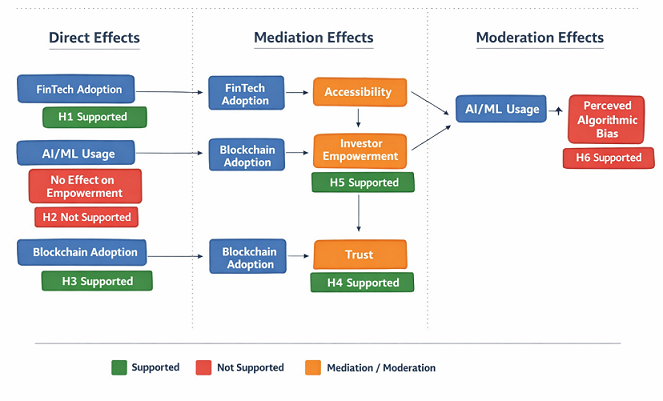
Figure 3 : Consolidated hypothesis results

Source: primary research data analysis

Figure 3 : Consolidated hypothesis results

The Figure 3 shows Direct Effects, Mediation Effects, and Moderation Effects side by side, with supported hypotheses highlighted in green, unsupported in red, and mediation/moderation pathways in orange. This shows that FinTech adoption (H1) and Blockchain usage (H3) are strong drivers of empowerment and trust. Accessibility (H5) and Trust (H4) act as mediators, translating adoption into empowerment. H6 is not supported, indicating that algorithmic bias does not significantly alter the relationship between AI/ML usage and investor empowerment. This is consistent with the non-significant direct effect observed in H2
 

Taken together, these results illustrate that empowerment is not a uniform outcome across technologies. FinTech and blockchain demonstrate robust, direct, and mediated effects, while AI/ML’s influence is contingent on ethical safeguards and transparency. The study therefore contributes to the literature by integrating direct, mediation, and moderation perspectives, offering a holistic framework for understanding investor empowerment in digital finance and provides insights for innovation.
From a policy perspective, the findings emphasise the need for adaptive regulation and governance mechanisms that balance innovation with investor protection. Regulators must address algorithmic bias, cybersecurity vulnerabilities, and systemic risks in decentralised finance, while simultaneously fostering inclusion and accessibility. For innovators, the results suggest that designing technologies with trust, fairness, and usability at the core is essential to achieving sustainable empowerment outcomes.
 
[1]   Abdelouahab, N., Seghir, A. M., & Maamri, A. (2025). Generative AI for Automated Financial Reporting and Narrative Generation. Journal of Ecohumanism, 4(4), 2937–2955. Doi.org/10.62754/joe.v4i4.7071.
[2]   Aldasoro I, et.al (2025), Intelligent financial system: How AI is transforming finance, Journal of Financial Stability, Volume 81, doi.org/10.1016/j.jfs.2025.101472.
[3]   Alt, R., Beck, R., & Smits, M. T. (2018). FinTech and the transformation of the financial industry. Electronic Markets, 28(3), 235–243. DOI:10.1007/s12525-018-0310-9
[4]   Ameen Talib, Chee Yuen Yew. (2017). A review of fintech regulations in emerging countries’ economies, Proceedings of the International Conference on Law, Governance and Globalization 2017. DOI: 10.2991/iclgg-17.2018.
[5]   Arner, D. W., Buckley, R. P., Zetzsche, D. A., & Veidt, R. (2020). Sustainability, Fintech and financial inclusion. European Business Organization Law Review, 21, 7–35. DOI:10.1007/s40804-020-00183-y
[6]   Bahoo, S., Cucculelli, M., Goga, X., & Mondolo, J. (2024). Artificial intelligence in finance: A comprehensive review through bibliometric and content analysis. SN Business & Economics, 4(2). https://doi.org/10.1007/s43546-023-00618-x
[7]   Battista Biggio, Blaine Nelson, Pavel Laskov (2012). Poisoning attacks against support vector machine, https://doi.org/10.48550/arXiv.1206.6389
[8]   Bellavitis, C., Filatotchev, I., Kamuriwo, D. S., & Vanacker, T. (2017). Entrepreneurial finance: New frontiers of research and practice: Editorial for the special issue Embracing entrepreneurial finance challenges. Venture Capital, 19(1-2), 1–16. DOI:10.1080/13691066.2016.1259733
[9]   Bentzion S, Ilan A, Shalom L, (2025), Systematic Analysis of Decentralized Finance, Journal of Global Information Management, Volume 33, Issue 1, doi.org/10.4018/JGIM.367810.
[10]   Berger, A. N., & Udell, G. F. (1998). The economics of small business finance: The roles of private equity and debt markets in the financial growth cycle. Journal of Banking & Finance, 22(6-8), 613–673.
[11]   Crisanto, J. C., Leuterio, C. B., Prenio, J., & Yong, J. (2024, December). Regulating AI in the financial sector: Recent developments and main challenges (FSI Insights on policy implementation No. 63). Bank for International Settlements. https://www.bis.org/fsi/fsip63.htm.
[12]   Croce, Annalisa & Martí, José & Murtinu, Samuele, 2013. "The impact of venture capital on the productivity growth of European entrepreneurial firms: ‘Screening’ or ‘value added’ effect," Journal of Business Venturing, Elsevier, vol. 28(4), pages 489-510.
[13]   de Bettignies, J. E. (2008). Financing the entrepreneurial venture. Management Science, 54(1), 151–166. DOI:10.1287/mnsc.1070.0759
[14]   Donner, J., & Trewin, D. (2017). Mobile banking and economic development: Linking adoption, impact, and use. Asian Journal of Communication, 18(4), 318-332.
[15]   Gomber, P., Kauffman, R. J., Parker, C., & Weber, B. (2018). On the Fintech revolution: Interpreting the forces of innovation, disruption and transformation in financial services. Journal of Management Information Systems, 35(1), 220–265. DOI:10.1080/07421222.2018.1440766
[16]   Gomber, P., Koch, J. A., & Siering, M. (2017). Digital finance and FinTech: Current research and future research directions. Journal of Business Economics, 87(5), 537–580.
[17]   Hair JF, Risher JJ, Sarstedt M, Ringle CM (2019), "When to use and how to report the results of PLS-SEM". European Business Review, Vol. 31 No. 1 pp. 2–24, doi: https://doi.org/10.1108/EBR-11-2018-0203
[18]   Hileman, G., & Rauchs, M. (2017). Global cryptocurrency benchmarking study. Cambridge Centre for Alternative Finance.
[19]   Kazanjian, R. K. (1988). Relation of dominant problems to stages growth in technology-based new ventures. Academy of Management Journal, 31(2), 257–279.
[20]   Kirilenko, A. A., & Lo, A. W. (2013). Moore’s law versus Murphy’s law: Algorithmic trading and its discontents. Journal of Economic Perspectives, 27(2), 51–78. DOI:10.1257/jep.27.2.51
[21]   Leal, A.A. (2024). Algorithms, Creditworthiness, and Lending Decisions. In: Moura Vicente, D., Soares Pereira, R., Alves Leal, A. (eds) Legal Aspects of Autonomous Systems. ICASL 2022. Data Science, Machine Intelligence, and Law, vol 4. Springer, Cham. https://doi.org/10.1007/978-3-031-47946-5_17.
[22]   Lee, I., & Shin, Y. J. (2018). Fintech: Ecosystem, business models, investment decisions, and challenges. Business Horizons, 61(1), 35–46. DOI: 10.1016/j.bushor.2017.09.003.
[23]   Márcia N M, Afshin A (2023). A Systematic Review on Robot-Advisors in Fintech. CAPSI 2023 Proceedings, APSI - Associação Portuguesa de Sistemas de Informação 160-185. DOI: https://doi.org/10.18803/capsi.v23.160-185.
[24]   Nefla, D., & Jellouli, S. (2025). Emerging technologies in finance: challenges for a sustainable finance. Cogent Business & Management, 12(1). https://doi.org/10.1080/23311975.2025.2495191
[25]   O’Neil, C. (2016). Weapons of math destruction: How big data increases inequality and threatens democracy. Crown Publishing Group. DOI:10.5860/crl.78.3.403
[26]   Omoleye, Samuel. (2020). Natural language processing (NLP) in fintech: enhancing customer interaction through AI chatbots and sentiment analysis. https://www.researchgate.net/publication/393023206.
[27]   Peric, Kosta. 2015. Digital financial inclusion. Journal of Payments Strategy & Systems 9: 212–14.
[28]   Philippon, T. (2016). On fintech and financial inclusion (BIS Working Papers No. 841). Bank for International Settlements.
[29]   Pilkington, M. (2016). Blockchain technology: Principles, applications, and challenges. Research Handbook on Digital Transformations, 225–253. https://doi.org/10.4337/9781784717766.00019
[30]   Varalakshmi, D. (2025). An analytical review of India’s startup ecosystem (2019–2023). International Research Journal on Advance Scinece Hub. DOI: 10.47392/IRJASH.2025.081
[31]   Sharma, A. (2021). Entrepreneurial Finance: External Financing Mechanisms of Start-ups with Special Emphasis on the Role of Venture Capital in the Indian Startup Ecosystem. International Journal of Scientific and Management Research, 04(08), 32–47. DOI:10.37502/IJSMR.2021.4803
[32]   Singh, S., & Subrahmanya, M. H. B. (2022a). Quantum of finance obtained by tech startups over the lifecycle: an analysis of its determinants. International Review of Applied Economics, 36(2), 187–204. DOI:10.1080/02692171.2021.1945549
[33]   Tapscott, D., & Tapscott, A. (2016). Blockchain revolution: How the technology behind bitcoin is changing money, business, and the world. Portfolio/Penguin.
[34]   Weller, B. M. (2018). Does Algorithmic Trading Reduce Information Acquisition? The Review of Financial Studies, 31(6), 2184–2226. https://www.jstor.org/stable/48615701.
[35]   Wang W, He T, Li Z (2023), "Digital inclusive finance, economic growth and innovative development". Kybernetes, Vol. 52 No. 9 pp. 3064–3084, Doi: https://doi.org/10.1108/K-09-2021-0866
[36]   Yli-Huumo, J., Ko, D., Choi, S., Park, S., & Smolander, K. (2016). Where is current research on blockchain technology? —A systematic review. PloS One, 11(10), Article e0163477.
[37]   Zetzsche, D. A., Arner, D. W., & Buckley, R. P. (2020). Decentralized finance and the limits of financial regulation. Journal of Financial Regulation, 6(2), 172-203. https://doi.org/10.1093/jfr/fjaa010
Reports
[38]   Gartner. (2022). Top strategic technology trends for 2022. https://gartner.com/document/code/757234.
[39]   IMF-FSB. (2023) Synthesis Paper: Policies for Crypto-Assets, http://www.fsb.org/2023/09/imf-fsb-synthesis-paper-policies-for-crypto-a...
[40]   OECD (2021), Artificial Intelligence, Machine Learning and Big Data in Finance: Opportunities, Challenges, and Implications for Policy Makers, https://www.oecd.org/finance/artificial-intelligence-machine-learningbig....
[41]   Regulation (EU) 2016/679 of the European Parliament and of the Council of 27 April 2016 on the protection of natural persons about the processing of personal data and on the free movement of such data, and repealing Directive 95/46/EC (General Data Protection Regulation). (2016). Official Journal of the European Union, L 119, 1–88.
[42]   Schwab, K. (2016). The fourth industrial revolution. World Economic Forum. https://www.weforum.org/stories/2016/01/the-fourth-industrial-revolution...
[43]   World Economic Forum. (2025). Transformation of Industries in the Age of AI Artificial Intelligence in Financial Services, World Economic Forum. https://reports.weforum.org/docs/WEF_Artificial_Intelligence_in_Financia....
Figure 1 : Relevant issues and risks stemming from the deployment of AI in finance
Figure 2 : Impact of AI on business models and activity in the finance Sector
Figure 3 : Consolidated hypothesis results
Pain Text:
Dr. Suryanarayana Murthy K, Dr. Manohar Lal (2026), Empowering Investors: FinTech, AI/ML, Blockchain impact. Samvakti Journal of Research in Business Management, 7(2) .