 +91-9958 726825
Impact of Communication in Organisations: An Employees' Perspective
|
Effective organisational communication plays a crucial role in enhancing employee performance, motivation, and workplace relationships. This study explores the impact of internal communication on employee performance from the employees’ perspective. While previous research has largely relied on quantitative methods, this study adopts a qualitative, interview-based approach to understand employees’ real-life experiences with communication practices in organisations.
Primary data were collected through semi-structured interviews with a purposive sample of 40 corporate professionals across Delhi NCR, India. Using manual thematic analysis, the study identified a significant ‘Clarity Gap’ in instructions as the primary bottleneck to productivity, validating these findings through data triangulation across different organizational hierarchies. The findings indicate that clear instructions, timely feedback, open dialogue, and communication training significantly improve employee productivity, confidence, collaboration, and job satisfaction. The study concludes that organisational communication is not merely a supportive function but a strategic driver of performance. It recommends standardising directives, strengthening feedback systems, promoting open communication culture, and implementing targeted communication training to managers as well as newcomers to enhance overall organisational effectiveness. |
|
Internal organisational communication serves as the fundamental framework for coordinating tasks, aligning strategic goals, and fostering employee motivation. While traditional models, such as the Information Theory Model[20], conceptualise communication as a linear transmission of data, modern professional environments demand a deeper understanding. As noted by the Transactional Model[4], communication is an interactive process where meaning is co-created, directly influencing psychological and relational dimensions of work[6].
Despite the strategic importance of transparent information exchange, contemporary organisations frequently encounter communication gaps in the form of ambiguous instructions and delayed feedback which act as significant barriers to productivity[11]. While previous research has extensively utilised quantitative metrics to measure these effects, there remains a critical need to explore the lived experiences of employees to understand the qualitative impact of these dynamics. The present study aims to explore the role of organisational communication in influencing employee performance by examining participant perceptions across diverse professional sectors in India. Utilizing a qualitative framework, the research identifies and investigates how specific communication variables such as clarity and feedback loops, shape an individual’s ability to execute responsibilities and collaborate within teams. To provide a deeper analytical exploration of the Clarity-Feedback nexus, this study is guided by the following research questions (RQs):
By highlighting the employee perspective, this study provides insights for organisations seeking to refine their communication architectures and enhance overall operational effectiveness. |
|
The study adopts a descriptive and exploratory qualitative research design. This approach is ideal for investigating complex human interactions, such as organisational communication, as it allows for a nuanced exploration of "lived experiences" that quantitative surveys may overlook.
While participants were accessible to the researcher, a purposive sampling strategy was applied to ensure the data set represented a diverse range of professional perspectives. Data was collected from 40 employees. This size was determined by the principle of thematic saturation, where subsequent interviews ceased to yield new conceptual insights. To participate, respondents were required to be currently employed in a full-time capacity and have a minimum of one year tenure at their current organization to ensure familiarity with internal communication cultures. The sample included a cross-section of industries and varying hierarchical levels, from entry-level interns to mid-level management and senior executives.
Table 1 : Demographic Profile of respondents
Primary data was gathered through semi-structured interviews, which offered the flexibility to probe specific employee experiences while maintaining a thematic core. All interviews were conducted in English language, the primary language of corporate communication in India. The interview instrument focused on clarity, feedback loops, and the impact of communication on individual productivity.
Table 2 : Mapping Interview Questions to Research Themes
The qualitative data was processed through manual thematic analysis[5], ensuring a systematic extraction of themes. The analysis was performed manually with deep involvement at each step. Transcripts were read multiple times to identify recurring patterns in workplace interactions (familiarization). All phrases related to performance and motivation were manually tagged (coding). In this process, a dominant theme emerged regarding ‘The Clarity Gap’, where lack of precise instructions and shifting expectations was identified as the primary barrier to efficiency (theme extraction). All identified themes were cross-referenced against the raw transcripts to ensure they accurately reflected the respondents' sentiments (review). |
|
Early empirical inquiries established a foundational link between clear communication and workplace outcomes. Downs and Hazen identified that adequacy of information and supervisory feedback are primary determinants of job satisfaction[7]. Al-Jarrar[1] and Varona[23] argue that transparent communication systems improve individual performance by fostering high levels of employee engagement. In the Indian context, Baksi[2] validated that clear communication and understanding of organizational goals to employees directly reduces role ambiguity and operational friction.
A significant part of recent literature on the role of communication considers instructional clarity as a driver of productivity. Rajhans[19] and Kalogiannidis[11] demonstrate that productivity is inherently tied to the accuracy of information delivery. When instructions are precise, the ‘cognitive load’ on employees is reduced, allowing for faster task completion and fewer errors[24]. It reflects that communication is not merely a social interaction but a functional tool that ensures individual efforts are synchronized with organizational objectives. Literature consistently highlights feedback as a psychological catalyst. Nguyen and Tran[18] and Hayase[9] suggest that internal communication strengthens an employee's sense of belonging. More specifically, Dhone[6] and Karsikah[12] et al. identify motivation and job satisfaction as critical mediators that link communication to employee productivity. Through a socio-psychological lens, effective feedback styles, particularly those employed by leaders, help align personal values with corporate culture, thereby boosting long-term commitment, professional growth[21]. From a Systems Theory perspective, communication acts as a coordinating mechanism that integrates disparate organizational activities[17]. Triana[22] et al. argue that effective channels encourage knowledge sharing, which is essential for problem-solving and innovation. Ineffective communication, conversely, disrupts this systemic integration, leading to conflict and reduced efficiency[13] [10]. While these quantitative studies provide a robust overview of the variables at play, they often overlook the lived experiences of employees, a gap the present qualitative study seeks to address. |
|
Thematic Analysis
The distribution of the primary communication barriers identified in the manual thematic analysis can be visualized by a doughnut chart. 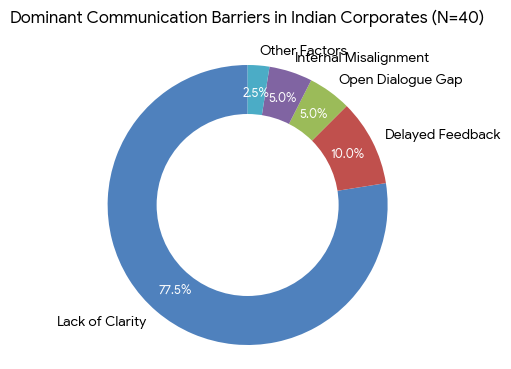 Figure 1 : Distribution of perceived communication barriers among Indian professionals
Lack of Clarity
Table 3 : Impact of Clarity Gap across Experience Levels
As the data was intern heavy, it depicted the vulnerability of early career professionals. For interns, clear instructions are not just helpful; they are essential for psychological safety. Without them, respondents reported a fear of making mistakes, which significantly slows down productivity. Further, according to the data, interns rely on frequent feedback as a form of validation. When feedback is delayed or unclear, it directly erodes their self-efficacy[3], making them less likely to take initiative in future tasks. These results suggest that organizations often overlook the instructional needs of early-career employees. 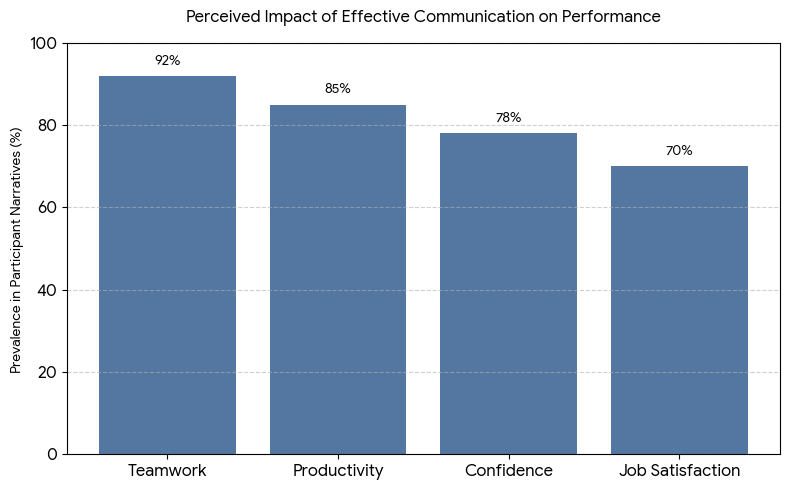 Graph 1 : Impact of Communication on Employee Metrics
92% of respondents observed an increase in coordination of teamwork when they felt communication was good. Similarly, increase in productivity and job satisfaction was also attributed to effective communication by most respondents. A high level of confidence (self-efficacy) was reported by 78% of respondents. Due to multiple advantages of effective communication, respondents seek open dialogues that foster organizational trust. When respondents felt they could speak freely (Open Communication Culture), they reported a 40% higher perceived sense of belonging, which is a strong predictor of long-term retention. Conversely, the Silence Culture found in some domestic firms leads to operational friction, where errors are suppressed rather than corrected, leading to systemic inefficiencies.
|
|
Despite the rigorous application of qualitative methods, this study acknowledges several limitations. While the sample size of 40 is substantial for qualitative research, the findings are specific to the Indian corporate context. Therefore, the results may not be directly generalisable to different cultural or geographic work environments. Another limitation is that the sample includes a high proportion of interns. However, this allowed for a focused exploration of how communication barriers specifically impact the socialization phase of the employee lifecycle in India.
Although measures like member-checking and audit trails were used, the manual thematic analysis involves an element of researcher subjectivity in the interpretation of employee narratives. Also, the study relies on self-reported data from semi-structured interviews. Participants may provide socially desirable answers or withhold criticisms regarding their current employers, despite the assurance of anonymity. This research captures a cross-sectional snapshot of communication in the present time. It does not account for how communication dynamics change over long-term project lifecycles. |
|
When respondents answered Q1 and Q2, they frequently highlighted clarity as a performance catalyst. Communication is the primary tool for reducing uncertainty. Good communication doesn't just help, it removes the psychological barrier of fear of error. Respondents in Q2 cited specific instances where a clear brief saved time, proving that communication is a tangible resource just like technology or capital that shortens the production cycle.
In response to Q3, participants identified that communication builds trust. Moving deeper, it signifies that communication reduces social loafing, the practice where individuals work less in a group. When communication is open, every team member feels visible and accountable. Suggestions for improvement in Q6 often focused on regularity and transparency, indicating a desire to shift from a top-down culture to a participative culture. Responses to Q4 and Q5 revealed that communication is viewed as a long-term asset. Employees don't see communication training as a soft skill but as structural capital. It increases their self-efficacy[3], the belief that they can handle senior roles. By stating that communication is important at the entry-level (Q5), respondents validated that communication is the foundation of Organizational Socialization, helping new hires learn faster and reach peak productivity. Managerial Implications The findings offer actionable strategies for managers and the most important is the standardisation of directives. Managers should move away from ambiguous instructions and adopt ‘Standard Operating Procedures’ (SOPs) to bridge the Clarity Gap. Targeted communication training should be provided to the managers to help them achieve the same. Communication effectiveness should be integrated into Key Performance Indicators (KPIs) for managers, incentivizing them to prioritize transparent and timely information flow. Organizations should institutionalise a safe feedback system by implementing anonymous digital feedback tools to overcome hesitation of junior employees to criticise their seniors. |
|
This study concludes that organisational communication is not merely a supportive function but a strategic driver of employee performance and professional growth. The qualitative data confirms that instructional clarity and structured feedback loops are the primary determinants of task efficiency. When these elements are absent, employees experience increased operational friction and decreased self-efficacy. Conversely, robust communication channels facilitate seamless teamwork and align individual efforts with broader organisational objectives.
A significant finding of this research is the universal demand for communication training, even at entry-level positions. Organizations should implement mandatory instructional workshops for interns and their immediate supervisors. The workshops for managers should focus on specific and measurable task delegation to eliminate the anxiety-inducing ambiguity identified in this study. The Micro-Level Instruction Training given to the managers would help to eliminate the Clarity Gap identified by most respondents. Learning about clarity protocols would also help in implementing standardized briefing templates. In addition to managers or supervisors, the study recommends training of upward communication skills to the interns. This targeted training is important to newcomers to help them develop communication skills to find clarity when they feel ambiguity. This will help them socialize easily and increase their self-efficacy. Systematising Feedback using structured, bi-directional feedback systems are recommended to ensure psychological safety. A cultural shift towards an open-door culture that encourages lateral communication, would reduce the bottlenecks associated with traditional top-down hierarchies. In summary, effective communication serves as the cornerstone of organizational resilience. By investing in transparent and inclusive communication systems, companies can achieve a sustainable competitive advantage through enhanced employee engagement and long-term professional development. |
|
|


Pain Text:
Ms. Samriddhi Mishra, Dr. Surabhi Singhal (2026), Impact of Communication in Organisations: An Employees' Perspective. Samvakti Journal of Research in Business Management, 7(1) 18 - 31.
Ms. Samriddhi Mishra, Dr. Surabhi Singhal (2026), Impact of Communication in Organisations: An Employees' Perspective. Samvakti Journal of Research in Business Management, 7(1) 18 - 31.