
 +91-9958 726825
Navigating Autonomous Finance: Acceptance of Agentic AI Among Gen Z and Millennials in Bangalore Urban
|
Financial services are being changed through appearance of agentic Artificial Intelligence (AI), which facilitates the use of autonomous systems capable of tracking, analysing, and implementing financial choices on behalf of the user. This paper focuses on how Gen Z and Millennial users in Bangalore Urban accept Agentic AI in autonomous financial decision-making. The quantitative research design was used, and a structured questionnaire measured on a five-point Likert scale was used to collect data on 400 respondents. The AI autonomy, competence, transparency, user control, trust, and intention to adopt AI relationship was investigated through structural equation modelling (SEM) as a moderator of the result. The results highlights that AI competence and autonomy have strongly positive effects on trust, which is a powerful factor in adoption intention. In addition, Gen Z also exhibits better acceptance than Millennials. This study contributes to the fintech adoption literature by demonstrating that trust and generational differences play a critical role in autonomous financial environments. The results have a practical implication to the developers of fintech to create transparent and trustworthy financial systems that are driven by AI.
|
|
Artificial Intelligence (AI) is rapidly transforming the financial services industry, evolving from rule-based automation and predictive analytics toward increasingly sophisticated decision-making systems[1] [3] [12] . Traditional AI applications in finance such as fraud detection, credit scoring, and robo-advisory platforms primarily function as decision-support systems, enhancing efficiency and accuracy while preserving human control over final decisions[4] [8] . In these contexts, AI augments human judgment rather than replacing it, maintaining a human-in-the-loop model of financial decision-making. A significant recent development in this domain is the emergence of Agentic AI, which represents a fundamental shift from assistive intelligence to systems with independent decision-making capabilities. Agentic AI can be defined as goal-directed, adaptive systems that are capable of autonomously initiating, evaluating, and executing decisions with minimal or no human intervention [2] [11] . Unlike traditional algorithmic systems that operate within predefined rules or semi-autonomous systems that require user validation, Agentic AI systems exhibit independent agency, characterized by contextual awareness, continuous learning, and the ability to act proactively rather than reactively.
This distinction is conceptually important. Conventional algorithmic systems in finance rely on deterministic logic and predefined instructions, while autonomous tools such as robo-advisors operate within constrained parameters set by users. In contrast, Agentic AI integrates decision authority, adaptability, and action initiation, thereby shifting the locus of control from human users to intelligent systems. As a result, the human–AI relationship transitions from one of support and augmentation to one of delegation and substitution, where users entrust not only execution but also judgment to AI systems [3] [8] . The movement toward Agentic AI has significant implications for user behavior, particularly in high-stakes domains such as financial decision-making. Financial decisions inherently involve risk, uncertainty, and long-term consequences, making trust a critical determinant of technology adoption[2] [5] [13] . In traditional AI environments, trust operates alongside human oversight, allowing users to verify, override, or calibrate system outputs. However, in Agentic AI contexts, users are required to relinquish direct control over decision-making processes, fundamentally altering the nature of trust from a supporting factor to a central mediating mechanism influencing adoption [9] .
Table 1 : Comparative Overview of AI System Types in Financial Decision-Making
Unlike traditional AI systems such as fraud detection or robo-advisors, which function as decision-support tools requiring human validation, Agentic AI systems exhibit higher levels of autonomy by independently initiating, executing, and optimizing financial decisions. Furthermore, while conventional algorithmic systems follow predefined rules, Agentic AI systems are adaptive, context-aware, and capable of learning from dynamic environments without continuous human oversight. Despite the growing body of literature on AI in finance, most existing studies focus on assistive or semi-autonomous systems where human supervision remains integral[4] [8] [9] . Consequently, current theoretical frameworks do not adequately capture user behavior in environments characterized by full delegation of decision authority to AI systems. Furthermore, although explainable AI research emphasizes transparency as a key driver of trust[5] [10] , it remains unclear whether transparency retains its importance when users are no longer actively involved in the decision-making process. This highlights a critical gap in understanding how trust is formed and sustained in fully autonomous, agent-driven financial environments conceptual gaps, generational differences may further influence the acceptance of Agentic AI systems. Prior research suggests that younger cohorts, particularly Generation Z, demonstrate higher levels of digital literacy and greater openness to emerging technologies, whereas Millennials may exhibit relatively higher sensitivity to risk and loss of control[5] [6] . However, empirical evidence examining generational differences specifically in the context of Agentic AI and autonomous financial decision-making remains limited, particularly within rapidly evolving Urban ecosystems. Against this backdrop, the present study investigates the acceptance of Agentic AI in autonomous financial decision-making among Gen Z and Millennials in Bangalore Urban. Specifically, it examines how system-level attributes namely autonomy, competence, transparency, and perceived loss of control influence trust, and how trust subsequently shapes behavioral intention to adopt such systems. By clearly conceptualizing Agentic AI as distinct from traditional and semi-autonomous systems, this study contributes to the fintech and AI adoption literature by positioning trust as the central mechanism in environments characterized by full decision delegation and by providing empirical insights into generational differences in emerging autonomous financial ecosystems. |
|
According to the conceptual model, the hypotheses of the study were:
Furthermore, trust was proposed as an intermediary between factor between system traits and behavioral intention, and generation (Gen Z vs Millennials) was proposed as a moderating factor that effects adoption behavior. |
|
Research Design
This study employs a quantitative, cross-sectional research design to examine the acceptance of Agentic AI in autonomous financial decision-making. A structured survey method was used to test the proposed conceptual model and hypotheses. Structural Equation Modeling (SEM) was applied due to its suitability for analyzing relationships among latent constructs and testing mediation effects. The cross-sectional approach is appropriate given the exploratory nature of Agentic AI adoption. Population and Sampling Instrument Development Data Analysis
The group comparison provides indicative differences; however, it does not test structural invariance. Future research may apply Multi-Group SEM (MG-SEM) for rigorous moderation analysis. Common Method Bias Assessment Ethical Considerations |
|
AI in Financial Services: From Assistive to Agentic Systems
Artificial Intelligence (AI) has emerged as a transformative force in financial services, enabling applications such as fraud detection, credit scoring, algorithmic trading, and portfolio management[1] [3] [12] . These systems have significantly improved operational efficiency, accuracy, and scalability within financial institutions[3] . However, the majority of existing AI applications function as assistive or decision-support systems, where human users retain ultimate authority over financial decisions[4] [8] . In such contexts, AI augments human judgment rather than replacing it, operating within a human-in-the-loop framework. While prior research has extensively examined user adoption of AI-enabled financial services, most studies are grounded in scenarios where AI complements, rather than substitutes, human decision-making[4] [5] . As a result, existing models of fintech adoption primarily based on perceived usefulness, ease of use, and trust may not fully capture user behavior in environments where decision authority is delegated entirely to AI systems[8] . A significant conceptual advancement in this domain is the emergence of Agentic AI, which represents a shift from assistive intelligence to systems capable of independent action. Unlike traditional algorithmic systems that rely on predefined rules or semi-autonomous tools that require user validation, Agentic AI systems are goal-directed, adaptive, and capable of autonomously initiating and executing decisions[2] [11] . This distinction is critical, as it introduces a new paradigm in which AI systems possess independent agency, fundamentally altering the role of humans in financial decision-making processes. Trust in AI Under Conditions of Full Autonomy Transparency, Explainability, and Their Evolving Role System-Level Attributes and Trust Formation Generational Differences in AI and Fintech Adoption Theoretical Framework
Table 2 : Mapping of UTAUT Constructs to the Present Study's Framework
Beyond these classical mappings, this study extends UTAUT by acknowledging that in fully autonomous systems, the traditional construct of Perceived Loss of Control represents a unique inhibitor that is largely absent from existing UTAUT formulations. In standard technology adoption contexts, users retain agency over system use and outputs. In Agentic AI environments, however, users delegate decision authority entirely, introducing a psychological resistance that undermines trust formation. This construct is theoretically positioned as a negative antecedent of trust, analogous to inhibitors identified in hedonic and risk-sensitive technology adoption models Furthermore, the moderating role of Generation (Gen Z vs. Millennials) aligns with UTAUT2's emphasis on Experience and Voluntariness of Use as moderating variables. Digital nativity and technology familiarity—more pronounced in Gen Z—are expected to moderate the strength of performance expectancy and trust relationships with behavioral intention, consistent with UTAUT2's theoretical propositions. Taken together, the present framework represents a domain-specific extension of TAM and UTAUT tailored to the Agentic AI adoption context, where full autonomy, trust delegation, and generational digital competence reshape the adoption calculus.
Conceptual Framework 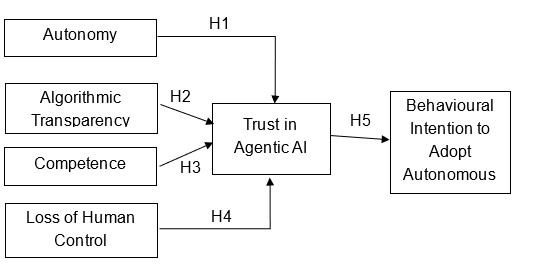 Figure 1 : Conceptual Model Agentic AI Adoption of Autonomous Finance.
Research Gap
Although prior research has examined AI adoption in financial services, it mainly focuses on assistive and semi-autonomous systems, overlooking fully autonomous environments. The emergence of Agentic AI introduces a new paradigm involving full decision delegation, independent system agency, and minimal human involvement. The literature reveals key gaps, including lack of conceptual clarity, limited understanding of trust in fully autonomous settings, and insufficient empirical studies on user acceptance across generations. This study addresses these gaps by clearly defining Agentic AI and examining how system-level attributes influence trust and behavioral intention. It further contributes by analyzing generational differences and proposing a trust-centered framework for Agentic AI adoption. |
|
One of the most notable findings of this study is the non-significant influence of Algorithmic Transparency (β = 0.081, p = .053) and Perceived Loss of Control (β = 0.062, p = .086) on Trust in Agentic AI. These results suggest that traditional determinants of trust identified in explainable and semi-autonomous AI settings may not operate similarly in highly autonomous Agentic AI environments. The absence of a significant transparency effect challenges prior Explainable AI (XAI) research, which generally identifies transparency as a key antecedent of trust .In the context of Agentic AI, users delegate both decision-making and execution to the system, reducing the practical value of understanding how decisions are made. Instead, trust appears to be formed primarily through perceptions of system competence and performance. Consistent with Automation Trust Theory users may rely more on outcome reliability than process explainability when interacting with highly autonomous systems. This finding suggests that performance-based trust may be more influential than explainability-based trust in agentic financial applications.
Similarly, the non-significant relationship between Perceived Loss of Control and Trust indicates that concerns regarding diminished user control may be less salient among digitally experienced users. Contrary to predictions from Reactance Theory (Brehm, 1966), respondents did not perceive reduced intervention capability as a substantial barrier to trusting autonomous AI systems. A possible explanation is that younger, technology-oriented users have become accustomed to delegating decisions to algorithmic systems such as recommendation engines, virtual assistants, and robo-advisors. Furthermore, the perceived benefits of efficiency, convenience, and optimized decision-making may outweigh concerns associated with reduced personal control. Collectively, these findings suggest that trust formation in Agentic AI differs from traditional technology adoption contexts. In highly autonomous environments, users appear to prioritize competence and performance outcomes over transparency and direct control. Consequently, existing technology adoption frameworks may require refinement to better explain user behavior in AI systems characterized by full decision delegation and high levels of autonomy. Practical Implications |
|
This study has several limitations. First, the sample is restricted to Bangalore Urban, which may limit generalizability to other geographical and cultural contexts. Second, the study relies on self-reported perceptual data, which may be subject to response bias and may not fully reflect actual user behavior in real financial settings. The absence of behavioral or transactional data limits the ability to validate whether stated intentions translate into real adoption decisions. Third, the cross-sectional design does not capture changes in user perceptions over time, particularly as familiarity with autonomous ai systems evolves. Finally, generational differences were examined using mean comparison rather than multi-group structural equation modelling (mg-sem), limiting the ability to draw strong conclusions about moderating effects.
|
|
Respondent Characteristics
Gen Z and Millennial Bangalore Urban users provided 400 valid responses. The sample was almost equal, as 52 percent were Gen Z (n=208) and 48 percent Millennials (n=192), which allowed drawing significant comparisons between generations.
Table 3 : Respondent Profile
Descriptive Statistics
Table 4 : Descriptive Statistics
Assessment of measurement model.
Table 5 : Measurement Model – Reliability & Validity
A satisfactory match was shown by the model fit indices: χ²/df < 3, CFI and TLI ≥ 0.90, and RMSEA ≤ 0.08. These findings support the measurement model's suitability for additional structural investigation.
Table 6 : Model Fit Indices (CFA & SEM)
Correlation Analysis
Table 7 : Discriminant Validity (Fornell–Larcker Criterion)
Structural Model Evaluation.
Table 8 : Structural Model Results (Hypothesis Testing)
The structural model has moderate explanatory power (R² = 0.52), explaining a significant fraction of the variance in behavioral intention. Trust has a significant impact on intention (β = 0.498), indicating its crucial role in adoption. autonomy (β = 0.214) and competence (β = 0.176) have modest effects, but transparency and control are weak and non-significant. This shows that performance-oriented parameters have a greater influence than interpretability-related elements in autonomous AI scenarios. Role of Trust: Mediation Analysis.
Table 9 : Mediation Analysis
But as transparency and control were not critical predictors in the structural model, there were not any indirect effects on them through trust. Thus, mediation is supported only partially. Multi-Group SEM: Generational Moderation Analysis
*Note: Significant at p < 0.05; NS = Not Significant. Table 10 : Structural Path Comparison Across Generations
|
|
This study examined the acceptance of Agentic AI in autonomous financial decision-making among Gen Z and Millennials in Bangalore Urban. The findings indicate that trust is a central determinant of adoption, mediating the relationship between system attributes and behavioral intention. Specifically, autonomy and competence significantly influence trust, whereas transparency and perceived control show limited direct effects. However, these findings are based on self-reported perceptions rather than observed behavior, and therefore reflect users’ intentions and attitudes toward Agentic AI rather than actual usage outcomes. Theoretically, the study contributes by extending technology adoption frameworks to fully autonomous, agent-driven environments and positioning trust as a core mechanism under conditions of decision delegation. Practically, the results suggest that fintech developers should prioritize system reliability, consistency, and performance to strengthen user trust. While the insights are indicative, further validation using behavioral data is necessary to confirm how these perceptions translate into real-world adoption.
|
|
|
|
SECTION–1: RESPONDENT INFORMATION
(This section gathers general background about the participant)
SECTION–2: DEMOGRAPHIC PROFILE
Gender
Education
Employment Status
Have you ever used digital financial applications (e.g., UPI, mobile banking, investment apps)?
Have you ever used AI-based financial tools (e.g., robo-advisors, automated investment suggestions)?
SECTION–3: PERCEPTION OF AGENTIC AI
Transparency of AI Decisions (3 items)
Perceived AI Competence (3 items)
Control & Comfort (3 items)
SECTION–4: TRUST IN AI (3 items)
SECTION–5: INTENTION TO USE AI-BASED FINANCIAL SYSTEMS (3 items)
|

Pain Text:
Deepthi H , Nikitha K , , Renushree S (2026), Navigating Autonomous Finance: Acceptance of Agentic AI Among Gen Z and Millennials in Bangalore Urban. Samvakti Journal of Research in Information Technology, 7(1) 34 - 57.
Deepthi H , Nikitha K , , Renushree S (2026), Navigating Autonomous Finance: Acceptance of Agentic AI Among Gen Z and Millennials in Bangalore Urban. Samvakti Journal of Research in Information Technology, 7(1) 34 - 57.